If you searched for the anna thriller movie, you probably want the quick truth: Anna is a slick 2019 spy-action thriller about a model turned KGB assassin who tries to outplay both Russian and American intelligence. It is twisty, stylish, and entertaining, but it works best if you want polished genre fun rather than a realistic spy drama.
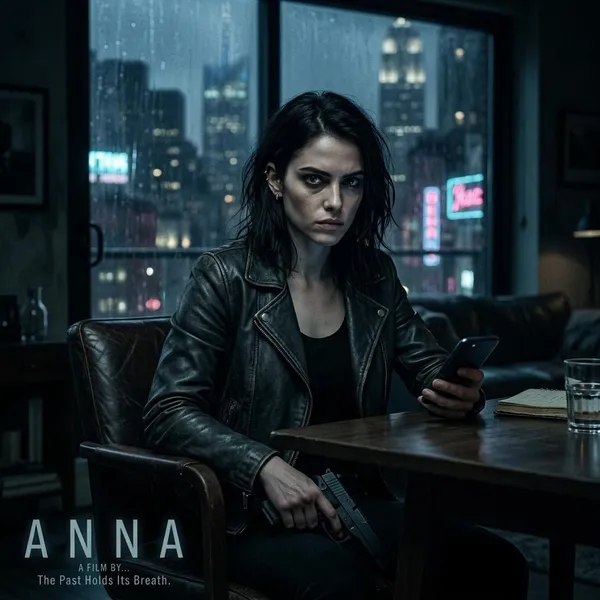
Anna movie at a glance
Anna is built for viewers who like assassins, secret handlers, double crosses, and timelines that keep folding back on themselves. The main thing to know before watching is that the movie does not tell everything in order. Some scenes are designed to look simple at first, then change meaning once the film shows what was happening behind the scenes.
A 2019 spy action thriller
Anna was released in 2019 and sits between spy thriller and action movie. The thriller side comes from hidden motives, surveillance, and competing intelligence agencies; the action side comes from assassinations, close combat, and sudden violence.
Written and directed by Luc Besson
Luc Besson wrote and directed the film, and his fingerprints are obvious: a dangerous female lead, sleek visuals, rapid shifts in power, and a story that favors momentum over realism. Viewers who liked his more stylized action work will probably adjust to Anna faster than viewers expecting a restrained spy film.
Led by Sasha Luss
Sasha Luss plays Anna Poliatova, and the role depends on control more than big emotional display. Anna survives by letting people underestimate her, so the performance often works through stillness, observation, and small shifts in confidence.
That makes the character more interesting as the movie goes on. At first she seems trapped inside other people's plans; later, the question becomes whether she has been quietly building one of her own.
Built around assassinations and double crosses
The plot runs on missions that are rarely as simple as they look. A target may be a test, a promise may be leverage, and a rescue may only move Anna from one form of control into another.
- Best expectation: a glossy assassin thriller with twists.
- Wrong expectation: a realistic intelligence drama.
- Main hook: Anna trying to turn rival agencies against each other.
Anna cast and characters
The cast matters because every major character puts a different kind of pressure on Anna. Some control her through fear, some through opportunity, and some through the promise of freedom that may not be freedom at all.
Sasha Luss as Anna Poliatova
Anna Poliatova is introduced as a young Russian woman whose modeling career gives her access to elegant public spaces, while her secret life makes her useful as an assassin. Her real arc is not about becoming deadly; it is about learning how to stop being owned.
Helen Mirren as Olga
Helen Mirren plays Olga, Anna's KGB handler and one of the film's sharpest presences. Olga is strict, controlled, and difficult to read, which makes her more than a simple villain.
Her importance becomes clearer near the ending. She understands both the system and Anna well enough to know when control has stopped being useful.
Luke Evans as Alex Tchenkov
Alex Tchenkov, played by Luke Evans, is the KGB officer who pulls Anna into the spy world. He represents the hard edge of recruitment: opportunity mixed with coercion.
- What he offers: a way out of Anna's old life.
- What he takes: control over her future.
- Why he matters: he makes the "glamorous assassin" life feel like captivity, not freedom.
Cillian Murphy as Lenny Miller
Cillian Murphy's Lenny Miller is a CIA operative who sees Anna as both danger and asset. He may look like an alternative to the KGB, but he is still working inside a system that values Anna for what she can deliver.
That distinction is important. Lenny is not simply a rescuer; he is another strategist, which makes his scenes with Anna feel like negotiations rather than clean acts of trust.
Lera Abova as Maud
Lera Abova plays Maud, whose role gives Anna's life outside espionage some emotional shape. In a story full of handlers and targets, Maud points toward the kind of normal connection Anna might want if she ever gets to choose for herself.
How the story reveals its twists
The plot of Anna is easier to follow once you accept that the movie is not hiding twists randomly. It withholds information so that the audience experiences the same uncertainty as the characters: no one has the full picture for long.
Time jumps hide key events
The time jumps leave out important pieces of action, then return later to fill in what really happened. This can make the movie feel slightly puzzle-like, especially when a scene that seemed finished turns out to have a hidden setup or consequence.
Earlier scenes return with new meaning
Several earlier moments are re-framed after the film reveals more context. A conversation can shift from casual to calculated, and a moment of weakness can turn out to be part of a larger plan.
This is where the movie asks for a little patience. If you watch while distracted, some of the reversals may feel sudden; if you watch the character dynamics closely, the reveals land more cleanly.
Anna shifts between the KGB and CIA
Anna works with both agencies because each one gives her something she needs at a specific moment. The KGB controls her training and assignments, while the CIA becomes a possible route out of that control.
- With the KGB: she is an asset under pressure.
- With the CIA: she gains leverage but not safety.
- For Anna: the rivalry itself becomes her best chance.
Each reveal exposes another deception
The reveals usually do not end the uncertainty; they uncover another layer of it. That fits the movie's world, where almost every relationship is shaped by surveillance, bargaining, or hidden orders.
By the final act, the most important change is that Anna is no longer only reacting to deception. She has learned how to use it.
Anna ending explained
The ending of Anna is about creating a believable escape, not winning a clean fight against one enemy. Anna knows that simply running would make both agencies chase her, so she needs an ending that looks final enough for powerful people to accept.
That is why the park sequence and Olga's final choice matter. Anna's victory is not that every danger disappears; it is that she stops being an active possession of either side.
Anna completes the CIA assignment
Anna completes the CIA assignment because disappearing too early would expose her plan. By doing what is expected long enough, she keeps both sides committed to the version of events she wants them to believe.
She stages her death in the park
The staged death gives the agencies a neat answer. A missing operative creates questions; a dead one can be filed away, explained, and politically managed.
For Anna, that is the smarter escape route. She does not need to overpower every person watching her. She needs them to stop looking.
She escapes both intelligence agencies
Anna escapes in the practical sense that matters for the story: she is no longer reporting to the KGB or being used by the CIA. The film does not promise that her future is risk-free, but it gives her something she has been chasing from the start: room to choose.
Olga secretly allows her to disappear
Olga's final move suggests that she understands Anna better than the agencies do. She can protect the institution's surface story while quietly letting Anna slip beyond its reach.
That choice keeps Olga complicated. She is still part of a ruthless system, but she recognizes when Anna has earned the one thing the system never intended to give her.
Anna finally gains her freedom
Anna's freedom is not shown as a perfect new life with no consequences. It is more modest and more meaningful: she has removed herself from the chain of command that treated her body, skill, and future as property.
Is Anna worth watching
Anna is worth watching if you want a fast, stylish spy thriller with a confident female lead and enough timeline tricks to keep things moving. It is less rewarding if your main priority is realism, originality, or a slow-burn intelligence story.
Strong action and stylish visuals
The movie's strongest surface appeal is its look. Fashion settings, polished rooms, and sudden bursts of violence give it a clean, high-gloss thriller feel.
The action is usually sharp rather than massive. If you like compact fight scenes and assassin set pieces more than huge explosions, that style will probably work for you.
Fast twists and shifting loyalties
The pace rarely settles for long. Alliances change, scenes are reinterpreted, and Anna's position keeps moving between danger and opportunity.
- Good fit: viewers who enjoy twisty but accessible thrillers.
- Less ideal: viewers who dislike nonlinear storytelling.
- Best viewing mode: pay attention, but do not expect heavy geopolitics.
A confident female lead
Anna is compelling because she does not stay frozen in victimhood. She watches how people use her, learns their blind spots, and gradually turns those habits against them.
Familiar ideas for seasoned spy fans
Experienced spy-thriller fans will recognize plenty of familiar material: coerced recruitment, double agency, hidden loyalties, and a final escape plan. The movie does not reinvent those ideas.
Its value is in the package. If you want something fresh at every turn, it may feel predictable; if you want a sleek genre ride with a clear emotional payoff, it does the job.

Conclusion
Anna is a good pick when you want a stylish assassin thriller with quick reversals, a controlled lead performance, and an ending built around escape rather than simple revenge. It is not the deepest or most realistic spy movie, but for viewers who enjoy glossy action, shifting loyalties, and a heroine quietly taking back control, it earns its place on the watchlist.