The history of thriller movies is easiest to follow by watching how filmmakers learned to control fear: first through editing and shadows, then through psychology, crime, politics, technology, and global storytelling. If you are trying to understand the genre, do not start by memorizing every subgenre; start with the big shifts in what audiences were afraid of and how movies made them wait for answers.
The early roots of thriller cinema
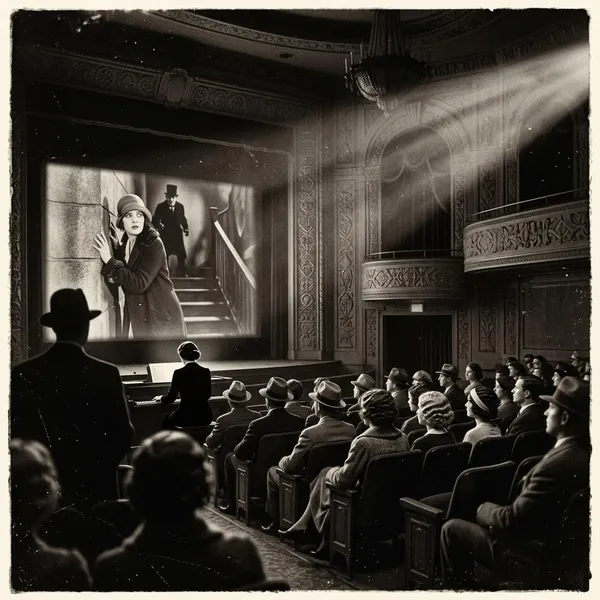
Thriller cinema began before "thriller" was a settled label. Silent films, crime serials, mysteries, and expressionist dramas were already using pursuit, hidden danger, and delayed revelation to keep viewers tense. The useful way to look at this period is not by asking whether every early film fits the modern genre perfectly, but by noticing which techniques survived.
Silent editing creates urgency
Silent filmmakers discovered that suspense could be built without dialogue by cutting between two connected actions. A person hides in a room, a pursuer gets closer, a train is about to leave, and the audience understands the danger before anyone needs to explain it.
This matters because many modern thrillers still use the same emotional pattern. A bomb under a table, a phone battery dying during an escape, or a character walking toward a trap all work because the viewer is forced to wait with more information than the person on screen.
German expressionism shapes visual anxiety
German expressionist films such as The Cabinet of Dr. Caligari showed that a thriller could make the world itself feel unstable. Warped rooms, sharp shadows, and unnatural angles suggested fear, paranoia, and mental disturbance before the plot spelled anything out.
Crime stories introduce danger and pursuit
Crime quickly became one of the genre's strongest foundations because it gives a story immediate direction. Someone commits a crime, hides a truth, chases a suspect, or tries to escape consequences. That simple pressure still powers detective stories, heist films, serial killer thrillers, and noir.
Early sound films deepen psychological tension
Sound changed thrillers by adding footsteps, whispers, telephones, off-screen voices, and silence. Fritz Lang's M is often discussed for this reason: it uses sound not just as decoration, but as a way to create dread around identity, pursuit, and public fear.
How Hitchcock and film noir shaped thrillers
By the middle of the 20th century, thrillers had become more controlled, darker, and more psychologically complicated. Alfred Hitchcock refined suspense into a craft of timing and audience knowledge, while film noir gave the genre flawed heroes, corrupt cities, and motives that were rarely clean.
If you are new to classic thrillers, this is the best place to slow down. Hitchcock teaches how suspense is built. Noir teaches why the people inside that suspense cannot always be trusted. Together, they explain much of the modern thriller's DNA.
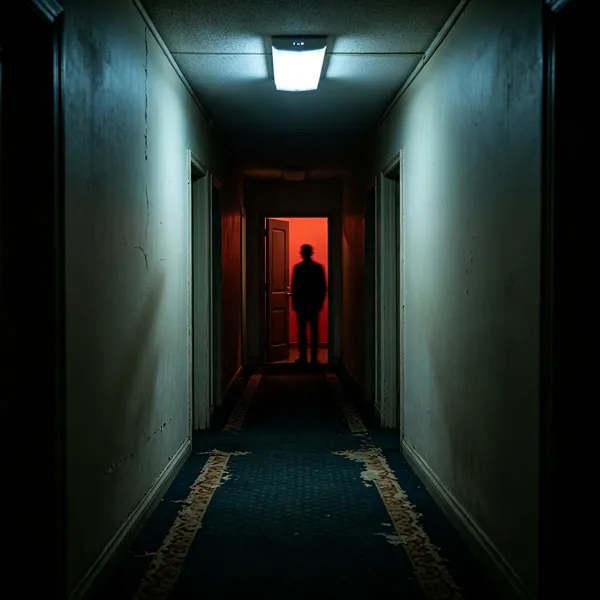
Hitchcock controls what the audience knows
Hitchcock's great trick was deciding exactly who knew what. Sometimes the audience knows more than the character. Sometimes the character hides something from the audience. Sometimes everyone is guessing. That control turns ordinary objects—a key, a window, a glass, a staircase—into sources of pressure.
For casual viewing, start with Rear Window or North by Northwest. For a darker psychological route, move to Vertigo or Psycho. The difference helps show how flexible his suspense method was.
Suspense grows from waiting rather than surprise
A surprise shocks you once. Suspense keeps you involved before the event happens. Hitchcock understood that waiting can be more powerful than impact because the viewer starts imagining every possible outcome.
Film noir adds flawed heroes and hidden motives
Film noir made thrillers feel morally dangerous. Its central characters are often detectives, veterans, drifters, clerks, or ordinary professionals who are already compromised before the plot tightens around them. They want money, love, revenge, escape, or control, and those desires make them vulnerable.
Urban crime stories bring darker moral choices
Noir also turned the city into a suspense machine. Apartment blocks, bars, offices, train stations, alleys, and crowded streets gave characters places to hide, watch, lie, and disappear. The danger was not outside normal life; it was woven into it.
- For detective stories, the city creates leads and dead ends.
- For criminals, it offers anonymity but also pressure.
- For ordinary people, it makes one bad choice feel hard to escape.
Psycho pushes thrillers toward psychological horror
Psycho changed the thriller by making private space feel unsafe. A motel, a shower, a polite conversation, and a family secret became enough to unsettle the audience. The film did not abandon suspense; it pushed suspense closer to horror, identity, and disturbed psychology.
After Psycho, thrillers had more permission to explore obsession, repression, voyeurism, and fractured identity. That influence is still visible in psychological thrillers and horror-thriller hybrids.
How thrillers evolved from the 1980s to the 2000s
From the 1980s through the early 2000s, thrillers became bigger, faster, and more commercially visible, but they did not all move in the same direction. Some added action spectacle. Some turned relationships into traps. Others became colder, more procedural, or structurally tricky.
Action thrillers raise the physical stakes
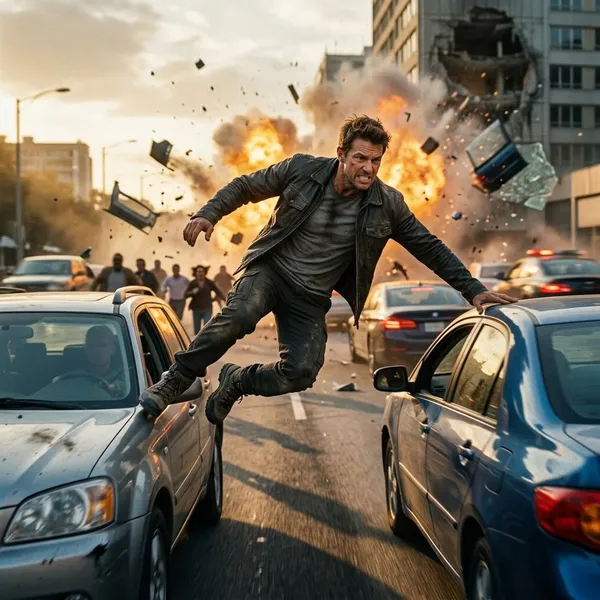
The 1980s helped turn the action thriller into a mainstream powerhouse. Films such as Die Hard worked because the action was tied to a clear suspense problem: a confined space, a vulnerable group, a ticking clock, and a hero with limited options.
That distinction matters. Not every action movie is a thriller. The thriller element appears when the spectacle depends on uncertainty, strategy, pursuit, or incomplete information.
Erotic thrillers turn relationships into danger
Erotic thrillers of the late 1980s and 1990s made attraction feel risky. Films like Fatal Attraction and Basic Instinct used desire, secrecy, betrayal, and obsession as suspense engines.
Serial killer films focus on investigation
Serial killer thrillers made the investigation itself frightening. In films such as The Silence of the Lambs, Se7en, and Zodiac, clues are not just puzzle pieces; they suggest another victim, another mistake, or another psychological cost for the investigator.
Techno thrillers explore digital threats
As computers and networked systems entered daily life, thrillers found a new kind of invisible danger. A stolen identity, hacked file, altered record, intercepted call, or hidden camera could threaten a character without anyone pulling a gun.
This subgenre works best when the technology is tied to ordinary dependence. Banking, travel, work, phones, and public records are already part of life, so a small digital failure can feel more unsettling than a far-fetched machine.
Puzzle films use memory and fractured timelines
Puzzle thrillers such as Memento made structure part of the suspense. Instead of simply asking what will happen next, the viewer has to ask what already happened, which memory can be trusted, and whether the main character is solving the mystery or creating it.
How major thriller subgenres developed
Thrillers stay popular because the genre can shift its source of danger. One film may frighten you through an unstable mind, another through a conspiracy, another through a criminal chase, and another through physical survival. The subgenre label is useful only if it helps you choose what kind of tension you want.
Psychological thrillers explore unstable minds
Psychological thrillers turn perception into the main battleground. The danger may involve another person, but the deepest tension often comes from memory, obsession, guilt, manipulation, or the fear that the protagonist cannot trust their own mind.
Films such as Repulsion, Black Swan, Shutter Island, and many later domestic thrillers use this approach. They are best watched with attention to point of view: whose version of reality is shaping the scene?
Crime thrillers follow criminals and investigators
Crime thrillers begin with a disruption: murder, robbery, kidnapping, disappearance, blackmail, or cover-up. From there, pressure builds because evidence appears, lies spread, and someone has to either solve the crime or survive it.
Spy thrillers build tension around secrecy
Spy thrillers rely on exposure. A false identity, coded message, double agent, leaked file, or failed border crossing can change the whole story. The best ones make small actions feel dangerous because the consequences reach beyond one person.
The tone changes with the era. Cold War spy thrillers often revolve around ideology and betrayal, while newer ones may focus on rogue agencies, surveillance, terrorism, private contractors, or data leaks.
Political thrillers focus on power and conspiracy
Political thrillers ask whether truth can survive power. The threat may come from governments, corporations, intelligence services, media systems, or military networks. Usually, one person discovers something that powerful people would rather keep buried.
If you are choosing between a spy thriller and a political thriller, look at the center of tension. Spy thrillers often focus on secrecy and missions; political thrillers focus more on institutions, accountability, and public consequences.
Neo-noir thrillers revive moral ambiguity
Neo-noir brings classic noir's darkness into later settings. The lighting may be modern and the violence more explicit, but the emotional world is familiar: damaged people, corrupt systems, doomed desire, and choices that cannot be fully repaired.
Films such as Chinatown, Body Heat, L.A. Confidential, and Nightcrawler show why noir never really disappeared. It became a way for thrillers to say that solving the mystery does not always fix the world.
Action thrillers combine suspense with spectacle
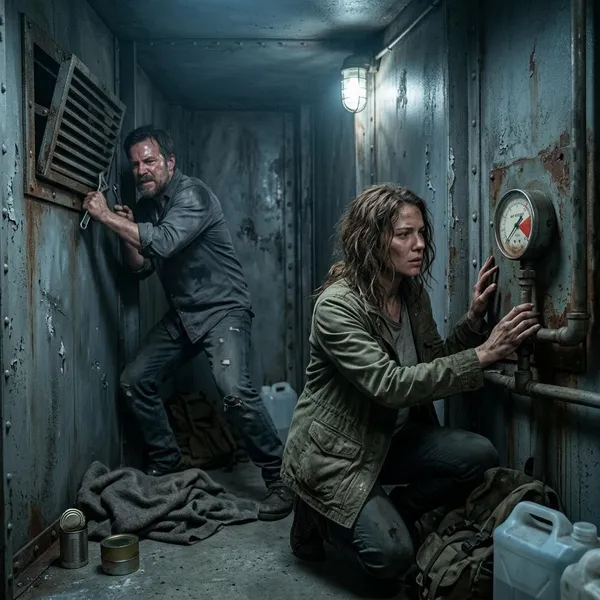
Action thrillers work when the action has a suspense shape. The hero may be trapped, outnumbered, racing a deadline, protecting someone, or trying to stop a disaster with incomplete information. Without that pressure, the film may be exciting but not especially thrilling.
How modern thriller movies keep changing
Modern thrillers are less tied to one country, one style, or one type of threat. They move through streaming platforms, mix with other genres, and respond quickly to fears about technology, inequality, surveillance, identity, and institutional trust.
Global filmmakers bring new styles and fears
International thrillers have widened the genre's emotional range. South Korean films such as Memories of Murder and Parasite, along with suspense films from Spain, France, Japan, India, and elsewhere, often bring different pacing, social pressure, tonal shifts, and endings than mainstream English-language thrillers.
Technology creates fresh forms of suspense
Phones, cameras, location tracking, social media, cloud storage, and digital records have changed what danger looks like. A thriller no longer needs a shadowy alley when a read receipt, leaked video, hacked account, or shared location can expose someone instantly.
Social issues shape modern conflicts
Many recent thrillers use suspense to dramatize social pressure. Class inequality, racism, migration, gendered violence, labor exploitation, public scandal, and institutional failure can turn a personal threat into something larger.
The strongest examples do not stop the story to deliver a message. They make the social issue part of the danger, so the viewer feels why a character has fewer choices, less protection, or more to lose.
Genre blending widens the audience
Modern thrillers often merge with horror, satire, science fiction, romance, family drama, or social commentary. That blending works as long as suspense remains the engine. If the central question is still "What is being hidden, who is in danger, and what happens when the truth comes out?", the thriller shape is still there.
Streaming gives international thrillers more reach
Streaming has made foreign-language and smaller thrillers much easier to find. Films and limited series that once depended on festivals, specialty theaters, or DVD discovery can now reach viewers across countries quickly.
Conclusion
The best way to understand thrillers is to follow the pressure: silent cinema created urgency, Hitchcock controlled waiting, noir darkened motives, later decades expanded the stakes, and modern filmmakers keep finding new fears in technology, politics, identity, and everyday life. If you want a practical viewing path, choose one film from each major turn rather than trying to watch everything at once; the genre's evolution becomes much clearer when you can feel how suspense changes from era to era.