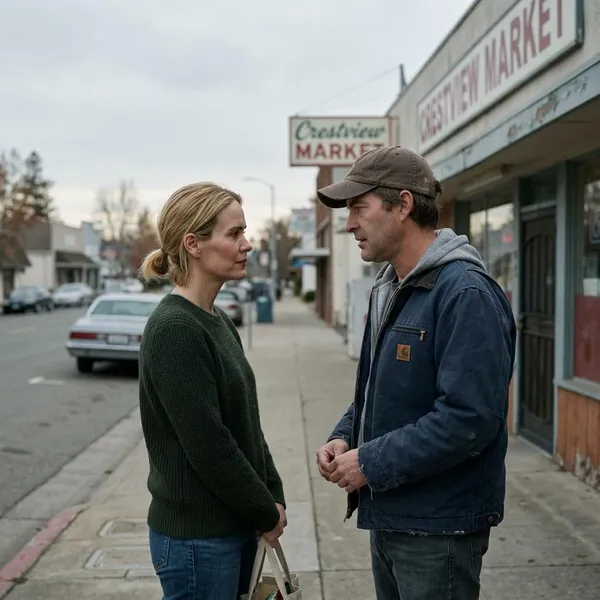
Hush is a lean home invasion thriller that works because it answers one scary question very quickly: what happens when someone who cannot hear the danger has to survive it alone? The 2016 Mike Flanagan film is simple on the surface, but its plot, cast, sound design, and ending give it more staying power than many louder thrillers. Expect spoilers if you are checking the ending before deciding whether to watch.
Hush plot summary
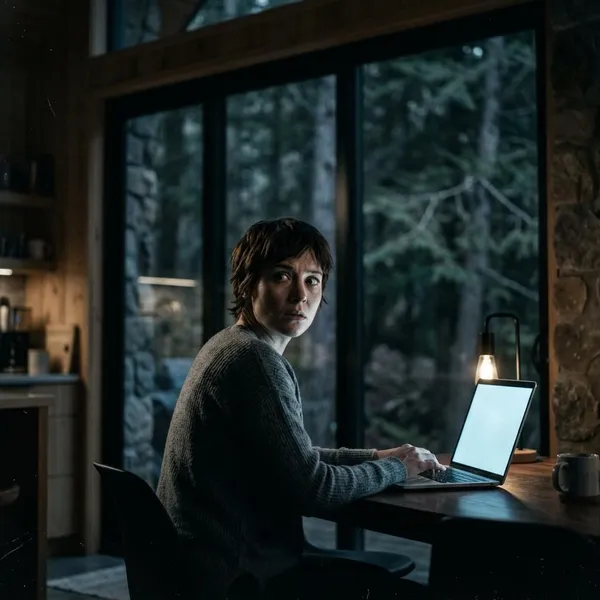
Hush follows Maddie Young, a deaf writer living alone in a remote house, after a masked stranger turns her quiet night into a fight for survival. The plot is not built around a complicated twist. Its tension comes from watching escape routes disappear one by one while Maddie keeps trying to think faster than the man outside.
Maddie lives alone in the woods
Maddie Young lives in a modern house surrounded by woods, where she writes, cooks, texts, and moves through her routines with confidence. Her deafness is part of how she experiences the world, but the film does not present her as helpless. That matters because the suspense depends on a capable person being placed in a situation where normal strengths suddenly have limits.
Sarah is killed outside the house
Maddie's friend and neighbor Sarah runs to the house after being attacked, but Maddie cannot hear her screams or pounding at the door. The scene is brutal because safety is only a few feet away and still unreachable. It also tells the audience something Maddie does not yet know: the danger is already at her home.
A masked man targets Maddie
Once the attacker realizes Maddie is deaf, he stops acting like someone who only wants to break in and starts treating the night like a game. He watches her through windows, cuts off options, and uses the fact that she cannot hear him moving outside.
The film makes an unusually smart choice by having him remove his mask early. From that point on, the mystery is not "who is he?" but "how does Maddie survive someone who is confident enough to show his face?" That shift makes the threat feel more personal and more realistic.
The killer blocks every escape
Maddie tries the obvious things first: secure the house, communicate for help, find a way out, and keep track of where the attacker is. The killer keeps closing those options. Large windows expose her movements, the remote location delays rescue, and every failed plan makes the next choice riskier.
Maddie turns the house into a battleground
By the final act, Maddie understands that hiding and waiting are not enough. She begins using the layout of the house, the attacker's habits, and whatever tools she can reach to create openings. The ending is not neat or heroic in a glossy way; it is painful, desperate, and physical.
For anyone looking for the ending explained, Maddie survives by outthinking and outlasting the intruder. She kills him in self-defense after a brutal struggle, and the victory works because the film has already shown her strongest trait: she adapts when a plan fails.
Hush cast
The Hush cast is small, which suits the movie's stripped-down style. There is no room for decorative characters, so each role either raises the stakes, reveals something about Maddie's life, or sharpens the threat. The film depends most heavily on Kate Siegel and John Gallagher Jr., but the supporting roles help make the night feel less abstract.
Kate Siegel as Maddie Young
Kate Siegel carries the movie as Maddie Young. Her performance has to communicate panic, calculation, pain, and resolve with limited dialogue, and that restraint is a big reason the film works. Maddie feels smart without becoming unrealistically fearless.
John Gallagher Jr as the Man
John Gallagher Jr. plays the attacker, credited as the Man, with a controlled and unnervingly ordinary menace. He is not a supernatural figure or a theatrical slasher. He feels like a violent person who enjoys power and becomes more dangerous when that power is challenged.
Michael Trucco as John
Michael Trucco appears as John, Maddie's ex-boyfriend, and his role briefly changes what the viewer expects. For a moment, his arrival suggests that outside help might finally shift the situation. Instead, the film uses him to show how quickly hope can collapse when the killer is still controlling the night.
Samantha Sloyan as Sarah
Samantha Sloyan makes Sarah feel warm and familiar in only a short amount of screen time. That matters because her death is not just an opening shock; it is the moment that turns Maddie's peaceful home into a place the audience no longer trusts.
Emma Graves as Max
Emma Graves is credited as Max, Maddie's cat. It is a small detail, but Max helps the house feel lived in before the attack begins. For some viewers, a pet in a home invasion movie also adds a quiet layer of worry, because the threat suddenly feels domestic rather than distant.
Why Hush stands out
Hush stands out because it does not try to make a simple premise look bigger than it is. It stays with one house, one main victim, and one immediate threat, then uses perspective and practical choices to keep tightening the pressure. If you like thrillers where the protagonist's decisions matter, this is the main reason it still gets recommended.
Maddie drives the survival story
Maddie is not waiting for a rescuer or stumbling through the plot by accident. She observes, tests ideas, changes plans, and makes mistakes that feel human rather than stupid. That makes the suspense more satisfying, especially for viewers who get frustrated when thriller characters ignore obvious options.
Sound design reflects her perspective
The sound design is one of the film's strongest tools. At key moments, the audio drops or shifts so the viewer shares more of Maddie's perspective. Without the usual warning cues of footsteps, breathing, or a door opening off-screen, you start scanning the frame more carefully.
This is not just a gimmick. It changes how suspense works. The movie makes danger visual and spatial, which fits Maddie's experience and gives the film a more specific identity than a standard stalker thriller.
The killer reveals his face early
Most home invasion movies would save the face reveal for a late twist. Hush does the opposite, and the choice pays off. Once the killer shows himself, the story stops pretending identity is the point.
The reveal also says something about his mindset: he believes Maddie will not survive long enough for recognition to matter. That arrogance makes the attack feel less like random slasher imagery and more like a fight over control.
One location sustains the tension
The house is easy to understand, which is essential in a one-location thriller. Viewers can track doors, windows, sightlines, and the distance between inside and outside. Because the geography is clear, every movement feels like a decision.
- The windows help Maddie see the threat but also expose her.
- The woods make escape tempting but unsafe.
- The rooms shift from comfort zones to hiding places and traps.
Minimal dialogue keeps the pace tight
The limited dialogue gives Hush its lean rhythm. The movie rarely stops to explain what a look, gesture, or movement has already made clear. That makes it a strong choice if you want a thriller that gets moving quickly and does not bury its premise under backstory.
How scary is Hush
Hush is scary in a grounded way. It is not a ghost story, and it does not rely mainly on supernatural imagery or constant jump scares. The fear comes from isolation, stalking, injury, and the thought that a familiar home can become unsafe very quickly.
For a quick viewing decision: watch it if you enjoy tense survival thrillers with realistic danger; skip it, or save it for daytime, if home invasion stories make you especially anxious. Someone watching alone at night may have a very different reaction from someone watching with friends who can handle suspense more casually.
The home invasion threat feels realistic
The scariest part of Hush is how ordinary its threat feels. A remote house, a stranger outside, and limited ways to call for help are easy to imagine without any fantasy rules. The film presses on the fear that privacy and safety can flip into isolation at the worst possible moment.
The violence becomes bloody
Hush is not extreme gore, but it is bloody enough to be uncomfortable. Injuries matter, characters visibly suffer, and the final struggle is rough rather than stylized. If you can handle suspense but dislike realistic wounds, that is the main content warning to keep in mind.
The violence works because it changes what Maddie can do. Pain, blood loss, and exhaustion affect her choices, so the danger feels cumulative instead of decorative.
Suspense matters more than supernatural fear
The movie is more about dread than shock. A figure at a window, a missed warning, or a failed escape attempt often feels scarier than a sudden loud scare because the tension has time to build.
Hush themes and meaning
Under the survival plot, Hush is about agency under pressure. The killer assumes Maddie's vulnerability gives him control, and the movie spends the rest of its runtime proving that disadvantage is not the same as defeat. The themes are clear without slowing the film down.
Vulnerability does not mean helplessness
Maddie is genuinely vulnerable: she is alone, deaf, injured, and cut off from easy help. The film never pretends those limits are minor. What it challenges is the killer's belief that those limits make her easy to dominate.
That distinction gives the movie its emotional weight. Maddie's survival is not about becoming invulnerable; it is about finding usable choices inside a terrible situation.
Adaptability becomes Maddie's strength
Maddie's main advantage is adaptability. When one plan fails, she does not simply repeat it. She reassesses, imagines outcomes, watches the attacker's behavior, and changes her approach even while frightened and hurt.
The house changes from refuge to trap
At first, the house represents independence. It is Maddie's workspace, private retreat, and chosen quiet place. Once the attack begins, the same qualities turn against her: distance becomes isolation, glass becomes exposure, and familiar rooms become places where she can be cornered.
Silence changes how danger is experienced
Silence in Hush is not treated as emptiness. It changes timing, attention, and risk. Maddie cannot rely on the warning sounds many thriller characters would hear, so the film makes visual awareness and memory more important.
The meaning is not that silence makes Maddie weak. The stronger idea is that danger looks different from her perspective, and survival requires the attacker's assumptions to be wrong. He thinks her world gives him an easy advantage; the ending proves he has badly misread her.
Conclusion
Hush still holds up because it knows exactly what to do with a small premise: keep the threat clear, make the space matter, and let Maddie's decisions drive the tension. It is worth watching if you want a tight home invasion thriller with a smart protagonist and realistic fear, but it may be too stressful if stalking, isolation, or bloody close-contact violence are the parts of horror you find hardest to sit with.