Inside turns a failed art heist into a slow survival nightmare: Nemo gets sealed inside a luxury penthouse, runs out of basic supplies, and tries to turn the apartment itself into a way out. The ending does not clearly show whether he lives or dies, but it does make one thing clear: the real story is his transformation from thief to creator under extreme pressure.
What happens in Inside
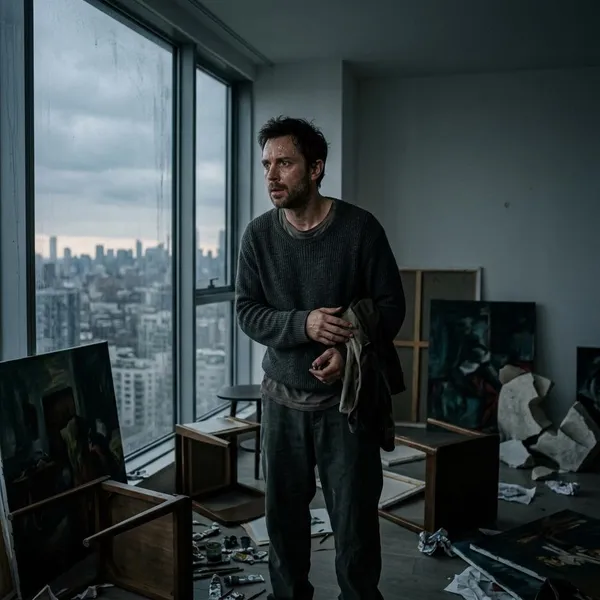
Inside begins with a clean criminal setup and then strips it down to something harsher. Nemo enters a billionaire's penthouse to steal art, but the security system malfunctions and locks him in. From that point, the movie stops being about whether the heist works and becomes about what a person does when luxury offers almost no practical help.
Nemo becomes trapped after the heist
Nemo is not a clumsy burglar who accidentally wanders into trouble. He knows what he is looking for, understands the value of the art, and expects the job to be precise. The plan breaks when the security system seals the penthouse, his outside contact disappears, and the apartment becomes a locked container high above the city.
The sharpest part of the setup is the contrast. A place built to impress guests becomes useless the moment Nemo needs ordinary help: a working exit, a phone, a person who can hear him, or a simple way to call for rescue.
He searches the penthouse for food and water
Once Nemo understands that no quick rescue is coming, his priorities change fast. Paintings and design objects lose their importance, while bottled water, scraps of food, and anything that can collect moisture become valuable. For a viewer trying to follow the survival logic, this is the first big check: the penthouse is expensive, but it is not prepared for someone to live there through an emergency.
He struggles with heat cold and isolation
The smart-home system makes his situation worse instead of safer. The temperature swings between punishing heat and cold, so the penthouse feels less like shelter and more like a machine that no longer cares whether a human body can survive inside it.
He destroys objects to survive
Nemo begins breaking the apartment because survival leaves him no polite options. Furniture becomes material, decoration becomes fuel or structure, and expensive objects become tools. The destruction is not random vandalism; it is the only way to make the penthouse serve a living person rather than a collector's taste.
- Practical level: he needs warmth, water, height, and leverage.
- Psychological level: breaking things gives him a sense of action.
- Symbolic level: the ruined apartment starts to look like his own artwork.
He builds a tower to reach the skylight
The skylight becomes the only visible route left, so Nemo builds upward from whatever the apartment gives him. The tower is ugly, unstable, and dangerous, but that is exactly why it matters. It turns the materials of his prison into a possible escape route.
Inside ending explained
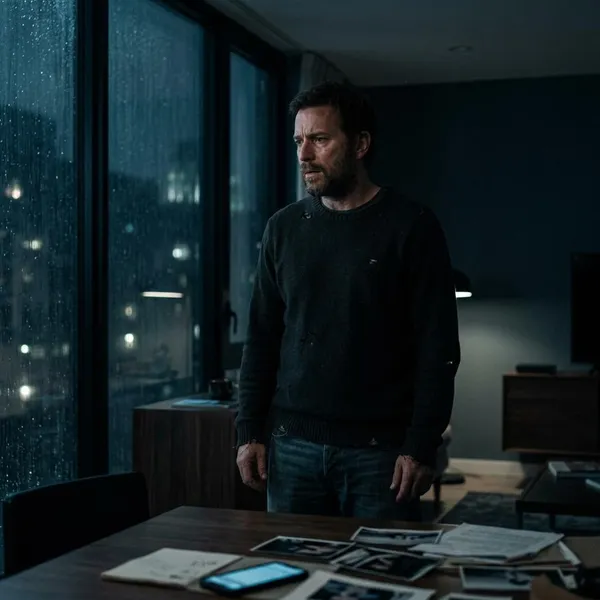
The ending of Inside is deliberately incomplete, but it is not meaningless. Nemo reaches the skylight, works on the bolts, leaves behind a final arrangement in the apartment, and makes one last climb. The film then refuses to show the exact result.
That missing final image is the point. A viewer looking for a literal answer will focus on whether Nemo escaped or fell. A viewer interested in the meaning will notice that he has already changed by the time he reaches the top: he is no longer simply stealing art, but making something out of pain, damage, and effort.
Nemo removes the skylight bolts
The bolts are the last clear barrier between Nemo and open air. Removing them is slow and exhausting, which makes the scene feel less like an action payoff and more like a final test of endurance. It also confirms that the skylight is not just a fantasy; it can physically open.
He completes his final message
Before the final attempt, Nemo arranges objects inside the penthouse in a way that feels intentional. It can be read as a message, a memorial, or an installation left for whoever eventually enters. That detail is important because Nemo is no longer only reacting to crisis. He is shaping what remains of him.
He attempts one last climb
Nemo's last climb is dangerous because all the practical odds are against him: he is weak, dehydrated, injured, and relying on a tower made from unstable furniture. The movie does not ask viewers to see this as an easy victory. It asks whether the attempt itself has meaning even if the body cannot finish it safely.
- He has no better route. The skylight is the only remaining possibility.
- He risks the fall anyway. Waiting would only mean further decline.
- He reaches for more than escape. The climb also works as release from the identity he had at the start.
The film hides his final fate
The film does not show Nemo standing outside, and it does not show his body after a fatal fall. That choice keeps both readings alive. A clear survival shot would make the movie a more ordinary escape story; a clear death scene would close down the symbolism too neatly.
Did Nemo escape in Inside
Inside does not confirm whether Nemo escaped. The open skylight supports a hopeful reading, while his physical condition and the danger of the climb support a tragic one. The fairest answer is that the movie wants both possibilities to remain active.
The open skylight suggests an escape
The open skylight is the strongest evidence that Nemo may have made it out. The whole film has been building toward that image, so it can be read as the payoff to his labor. If you prefer the hopeful version, Nemo survives, but not as the same controlled, professional thief who entered the penthouse.
The dangerous climb suggests death
The darker reading is just as plausible. Nemo is near collapse, the tower is unsafe, and the final breakthrough involves glass, height, and very little remaining strength. Even if he opens the skylight, the attempt could still kill him before he reaches safety.
This version makes the ending cruel but coherent: Nemo reaches the threshold of freedom, yet pays for it with his life.
The missing outcome supports both readings
The missing outcome is not a gap the viewer is supposed to "solve" with one hidden clue. It is a design choice. The movie gives enough evidence for escape and enough evidence for death, then stops before either can become the only answer.
The ending matters more as transformation
The most useful way to read the ending is through transformation. Nemo starts with a goal based on ownership and value: get in, take the art, get out. By the end, ownership barely matters. What matters is whether he can create meaning, leave a trace, and reach some form of freedom before the penthouse destroys him completely.
That reading works whether he survives or not. Physical escape would show that he endured the ordeal; death would show that his final act still broke the prison's control over him.
Main themes in Inside
The strongest themes in Inside come from the gap between what the penthouse appears to offer and what Nemo actually needs. It has art, technology, space, and money everywhere, but almost no warmth, connection, or mercy.
That is why the movie works best for viewers who enjoy slow symbolic thrillers. If you want constant twists, it may feel too spare. If you like watching a simple premise turn into a study of survival, class, and identity, the minimal setup becomes the point.
Art as a tool for survival
At first, art is the target of the crime. Later, it becomes one of Nemo's ways to stay human. His marks, arrangements, and improvised structures give shape to time and fear. In that sense, art is not just decoration in the film; it becomes a survival habit.
Creation through destruction
Nemo creates by breaking things. He dismantles the apartment's polished design and turns it into something rough, personal, and functional. The tower is the clearest example: it is made from the penthouse's own objects, but it becomes the structure that might defeat the penthouse.
Isolation and mental decline
The film treats isolation as a slow pressure rather than a sudden shock. Nemo loses conversation, routine, privacy, and any reliable sense that another person knows he exists. His mental decline grows from that silence, not from supernatural threat.
Wealth without human connection
The penthouse is full of value but poor in the things that keep a person alive. That is the film's clearest class critique. The space can display taste, status, and rare objects, but it cannot offer care when the system fails.
The movie is not simply saying that expensive things are bad. It is sharper than that: a life arranged around possession can look complete from the outside while being strangely empty when human need enters the room.
Freedom through personal sacrifice
Freedom in Inside is never clean or easy. Nemo gives up comfort, dignity, certainty, and maybe his life to reach the skylight. The film makes escape feel costly because it wants freedom to mean more than unlocking a door.
A practical way to separate the two main readings is this: if Nemo lives, freedom costs him his old self; if he dies, freedom becomes the final act of refusing to remain contained.
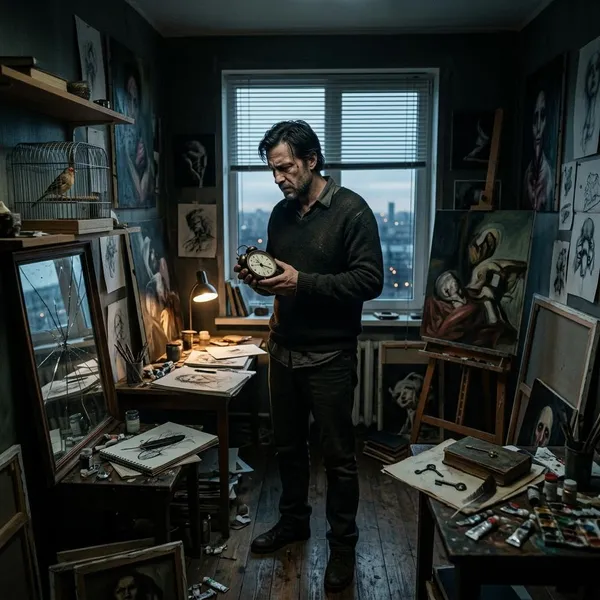
Symbols in Inside
Inside uses symbols because the story has so little dialogue and so few characters. The repeated images do a lot of work: the skylight, tower, penthouse, pigeon, and Nemo's name all point to the same central tension between confinement and release.
The skylight as freedom
The skylight is freedom because it is the only visible opening left. Its position above Nemo makes the escape feel like an ascent rather than a normal exit, which is why the ending carries a spiritual charge as well as physical suspense.
The tower as struggle
The tower represents effort built from failure. It is awkward, fragile, and made from the same luxury objects that once trapped him. That makes it one of the movie's strongest images: progress is possible, but only through risk and improvisation.
The penthouse as a gilded prison
The penthouse is beautiful enough to look like a fantasy and sealed enough to function like a cell. That contrast is the symbol. The more Nemo suffers, the more the apartment's elegance starts to look cruel rather than impressive.
A simple apartment would create a trapped-room thriller. This penthouse adds a harsher idea: comfort without human connection can become another kind of confinement.
The pigeon as unreachable escape
The pigeon matters because it is ordinary life just out of reach. Outside the glass, it can move, breathe, and leave. Inside, Nemo has wealth surrounding him but less freedom than a bird most people would normally ignore.
Nemo's name as lost identity
Nemo means "no one," and the name fits a character who becomes unseen, unheard, and almost erased. As the film continues, he becomes less defined by his criminal role and more by basic human needs: thirst, hunger, fear, imagination, and the will to keep going.
Conclusion
Inside is most satisfying if you stop treating the ending as a puzzle with one missing shot and start reading it as a survival story about transformation. Nemo may escape, or he may die at the edge of freedom, but the film's lasting point is that the penthouse fails as a home, succeeds as a prison, and accidentally forces a thief to leave behind something closer to art.