The ma thriller movie is a spoiler-heavy psychological thriller about Sue Ann, a lonely veterinary assistant who lets teenagers party in her basement before her need for attention turns into control, revenge, and violence. It is worth watching if you enjoy tense, slightly campy thrillers with a memorable villain; it is less ideal if you want tight realism or a straight horror film packed with scares.

Ma cast
The cast gives Ma more bite than its premise might suggest. The teenagers pull Sue Ann into the present, while the adults connect her behavior to old humiliation and unfinished guilt. That split matters because the movie is not only about a dangerous woman stalking teens; it is about a woman treating the next generation as if they owe her for the cruelty of the last one.
Octavia Spencer as Sue Ann
Octavia Spencer plays Sue Ann Ellington, the woman the teenagers call Ma, and her performance is the film's main attraction. She makes Sue Ann funny, needy, wounded, and frightening without turning her into a flat horror villain.
Diana Silvers as Maggie
Diana Silvers plays Maggie, the new girl in town and the closest thing the movie has to a grounded point of view. She is the one who starts noticing that Ma's generosity comes with emotional strings attached.
Maggie's role is useful rather than flashy: she gives the audience someone sensible to follow as the basement changes from a secret hangout into a warning sign.
Juliette Lewis as Erica
Juliette Lewis plays Erica, Maggie's mother, and brings a nervous, protective energy to the adult side of the story. Erica understands earlier than the teenagers that Sue Ann is not just awkward or lonely.
Her scenes also remind the viewer that the past did not disappear just because the adults moved on. For someone watching the movie as a revenge story rather than a teen thriller, Erica is one of the characters who makes that older damage visible.
Luke Evans as Ben
Luke Evans plays Ben, Maggie's father and one of the key people tied to Sue Ann's high school trauma. He represents the polished adult version of the social power that once humiliated her.
Corey Fogelmanis as Andy
Corey Fogelmanis plays Andy, Ben's son, which makes him more than just another teenager in Ma's basement. Sue Ann projects her old feelings about Ben onto Andy, and that makes her attention toward him especially disturbing.
Tanyell Waivers as Genie
Tanyell Waivers plays Genie, Sue Ann's daughter, and her role quietly shows what Ma's "care" looks like inside the home. Genie is controlled, isolated, and treated more like something to manage than someone allowed to grow.
That makes Genie important in the final act. When she turns against her mother, it is not just a plot move; it is the moment the movie stops letting Sue Ann hide behind the language of protection.
Allison Janney as Dr Brooks
Allison Janney appears as Dr. Brooks, Sue Ann's boss at the veterinary clinic. It is a small role, but it adds pressure to Sue Ann's life by showing how often she feels dismissed, belittled, or powerless.
Why Ma stands out
Ma stands out less because of flawless plotting and more because it has a strange, specific personality. It mixes teen-party suspense, social awkwardness, revenge, dark humor, and a lead performance that makes even the messier scenes hard to forget.
- Best fit: viewers who enjoy psychological tension, campy discomfort, and villain-focused thrillers.
- Not the best fit: viewers who want constant scares, realistic police logic, or subtle character drama.
- Good watch setting: a casual movie night where the odd tone is part of the fun.
Octavia Spencer plays against type
A major reason the film attracted attention is that Octavia Spencer plays against the warmth many viewers associate with her. The movie uses that expectation well: Sue Ann can seem helpful for a moment, then emotionally inappropriate a second later.
That contrast keeps the character unpredictable. You can understand why the teenagers underestimate her at first, especially when she presents herself as the adult who will buy alcohol and stay out of their way.
The basement creates a memorable setting
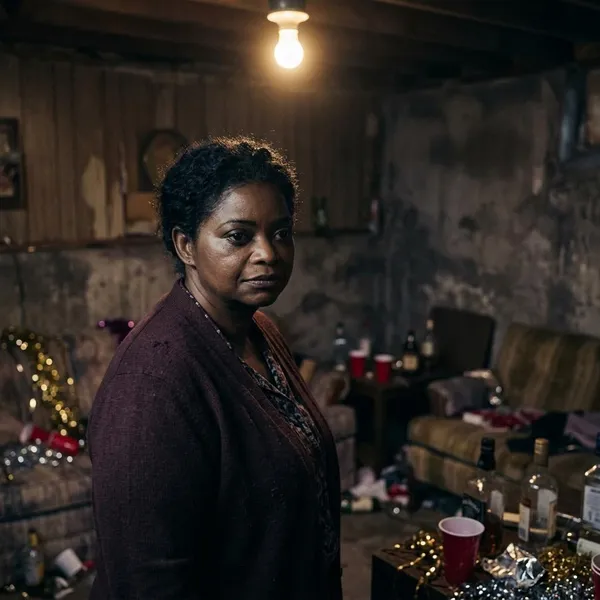
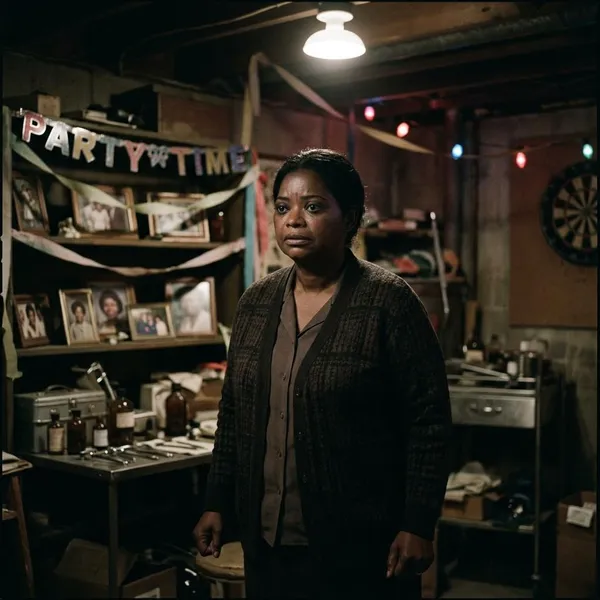
The basement works because it changes meaning as the movie goes on. At first, it is a forbidden party space: private, exciting, and away from parents. Later, the same room becomes a controlled environment where Ma sets the rules and the teenagers realize too late that they have walked into her world.
Dark humor balances the tension
The dark humor is one of the reasons Ma is more memorable than a standard stalker thriller. Sue Ann's attempts to seem cool, wanted, or casually friendly can be funny and painful at the same time.
That tone will not work for everyone. A viewer looking for pure horror may find the shifts odd, while someone watching with friends may find those same awkward scenes to be the most entertaining part.
The revenge story adds psychological depth
The revenge angle gives Sue Ann's behavior a clearer emotional engine. She is not targeting random teenagers; she is targeting the children of people connected to her humiliation.
That does not make her sympathetic in a simple way. It makes her more disturbing because she turns real pain into a new injustice, punishing people who did not cause the original harm.
The exaggerated tone gives it cult appeal
Ma has the kind of heightened tone that divides viewers. Some scenes stretch credibility, but they also give the movie its identity. A safer version might have been smoother, but probably less memorable.
Ma ending explained
At the end of Ma, Sue Ann captures the teenagers, Genie stops protecting her mother, Maggie wounds Sue Ann during the struggle, the house catches fire, the group escapes, and Sue Ann dies inside beside Ben. The ending is dramatic, but its emotional point is clear: Sue Ann is so trapped in her old humiliation that she chooses the fantasy of staying near Ben over saving herself.
The finale also completes the movie's main reversal. The basement began as a place where the teens thought they were getting freedom. By the end, it is exposed as a trap built around Sue Ann's need for control.
- Sue Ann escalates: she stops pretending to be harmless and uses the house to trap the teens.
- Andy becomes symbolic: because he is Ben's son, Sue Ann treats him as part of her old fantasy and revenge.
- Genie resists: her daughter finally sees that Sue Ann's control cannot be excused as protection.
- Maggie fights back: stabbing Sue Ann gives the group a chance to escape.
- The fire destroys the house: the space Sue Ann used for power collapses around her.
- Sue Ann stays with Ben: her final choice shows that her obsession has consumed her completely.
Sue Ann captures the teenagers
Sue Ann captures the teenagers after her manipulation turns into open violence. She drugs, restrains, and terrorizes them, making it clear that the friendly "Ma" persona was always tied to access and control.
The important detail is the setting. The same basement that once felt like a loophole for teenage freedom becomes the place where their lack of caution finally catches up with them.
Genie turns against her mother
Genie turns against Sue Ann because she can no longer deny how dangerous her mother has become. Her decision matters because she has lived under the same control that Sue Ann tries to impose on everyone else.
Maggie stabs Sue Ann
Maggie stabs Sue Ann during the final struggle, and the moment is framed as desperate survival rather than heroic revenge. It breaks Sue Ann's control long enough for escape to become possible.
It also gives Maggie a sharper role than simply being the cautious teen. She becomes the person who interrupts Sue Ann's attempt to make the younger generation pay for the past.
The group escapes the burning house
The group escapes while the house burns, which gives the thriller a clean physical payoff: the survivors get out, and Sue Ann's controlled space is destroyed.
Symbolically, the fire matters because it wipes out the place where Sue Ann built her fantasy of power. The basement cannot remain a party space, a prison, or a shrine to old resentment anymore.
Sue Ann dies beside Ben
Sue Ann dies beside Ben in the burning house. Instead of escaping, she stays near the man tied to her old humiliation and longing, which makes the ending feel tragic as well as grotesque.
Her death is not a victory for her. It shows that she never really left high school emotionally, even after all the years, violence, and revenge.
Ma themes and meaning
The meaning of Ma is built around trauma, loneliness, control, and revenge passed onto people who did not cause the original harm. The movie is not subtle, but that bluntness is part of its appeal: Sue Ann's emotional damage is visible in nearly every choice she makes.
Bullying and unresolved trauma
Bullying sits at the center of Sue Ann's backstory. The humiliation she experienced in high school did not stay in the past for her; it became the emotional script she keeps replaying as an adult.
The film's warning is not that every bullied person becomes dangerous. It is that shame left unprocessed can distort how someone sees power, intimacy, and revenge. Sue Ann does not heal from the past; she tries to restage it with herself in control.
Loneliness and obsession
Sue Ann's loneliness is sad at first, but the movie shows how quickly it becomes possessive. She wants attention from the teenagers, then loyalty, then dependence.
- Healthy connection: accepts distance, boundaries, and rejection.
- Sue Ann's version: treats attention as something owed once she has been useful.
That distinction is why her behavior becomes so unsettling. She is not only lonely; she believes other people should fill that loneliness on her terms.
Control disguised as care
One of the clearest ideas in Ma is that control can hide behind helpfulness. Sue Ann buys alcohol, offers a place to party, and frames some rules as protection, but each gesture gives her more access to the teenagers.
The same pattern appears with Genie. Sue Ann calls it care, but the result is isolation and obedience. For a viewer thinking about real-life red flags, that is the practical warning: generosity becomes dangerous when it comes with surveillance, pressure, or punishment for pulling away.
Revenge against the next generation
Sue Ann targets teenagers partly because they are connected to the adults who hurt her. In her mind, they carry their parents' social status and emotional debt, even though they did not create the original cruelty.
That makes the revenge story bitter rather than satisfying. Instead of confronting the past in a healthy way, Sue Ann transfers the damage to younger people who happen to be nearby and vulnerable.
Conclusion
Ma is worth watching for Octavia Spencer's unsettling performance, the memorable basement setup, and a revenge story that turns old humiliation into present danger. It is not the cleanest or most realistic thriller, but if you want a strange, darkly funny movie with a villain people still talk about afterward, it earns its cult reputation.