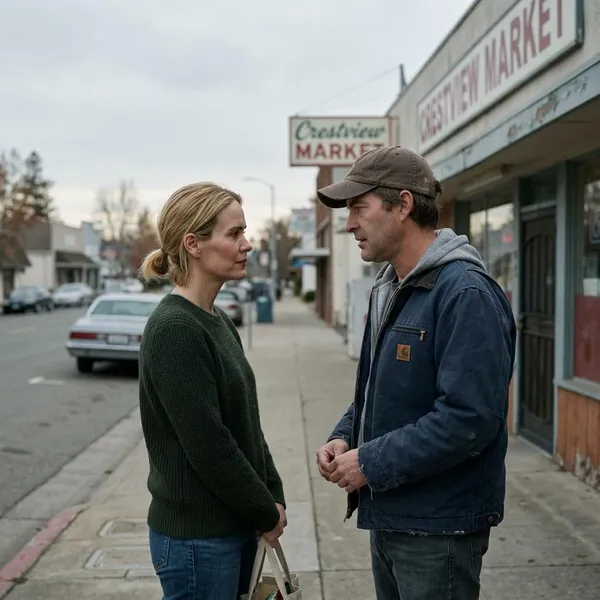
If you searched for the mother thriller movie, you are probably looking for Darren Aronofsky's mother!, a disturbing psychological horror film about a woman whose home is invaded, consumed, and finally reborn in a cruel cycle. It works as a tense home-invasion nightmare on the surface, but the plot is really built around symbolism: creation, worship, nature, ego, motherhood, and the cost of endless giving.
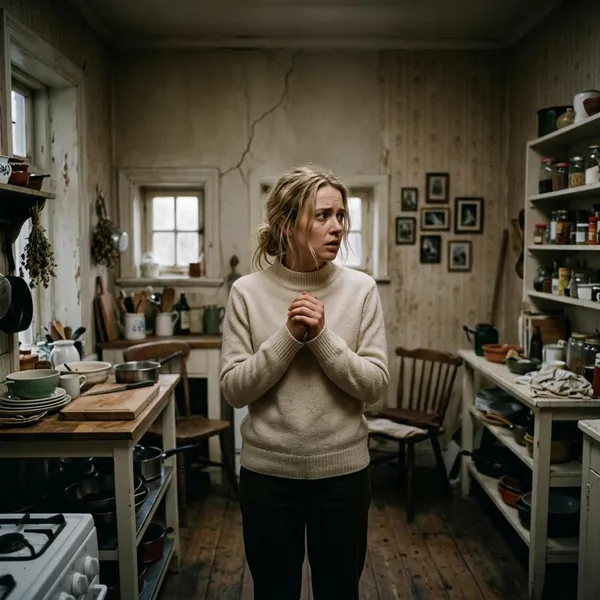
What is mother! about?
mother! is about Mother, a woman living with her poet husband in a remote house she is carefully restoring. Their quiet life starts to break apart when strangers arrive, ignore her discomfort, and slowly turn the home into a place she no longer controls.
The first thing to know is that the movie does not behave like a normal thriller for long. It begins with awkward social tension, then shifts into a symbolic nightmare where the house can be read as a home, a body, the Earth, or the whole world.
A couple lives in isolation
Mother and Him live alone in a large country house that was once damaged by fire. Mother spends her days repairing and decorating it, while Him struggles with writer's block and waits for inspiration to return.
The imbalance is obvious early: she is focused on care, repair, and privacy; he is focused on being admired. That difference matters more than any single argument between them, because it explains why he keeps inviting the outside world in while she keeps trying to protect the space.
Strangers enter their home
The first stranger is Man, an ill visitor who appears at night. Him welcomes him warmly, even though Mother is uneasy and was not asked whether she wanted a guest.
Then Woman arrives, followed by their sons. What starts as one uncomfortable visit becomes a pattern: Mother senses danger, Him treats hospitality as more important, and the guests act as if the house is already partly theirs.
The guests ignore every boundary
The early horror comes from small violations rather than monsters. Guests enter private rooms, touch things they should not touch, smoke inside, break objects, and dismiss Mother when she asks them to stop.
- Literal level: it feels like a nightmare version of hosting rude people who will not leave.
- Relationship level: Mother's needs are treated as less important than Him's desire to be liked.
- Symbolic level: the house becomes a picture of nature, domestic labor, and feminine care being used up by others.
The house descends into chaos
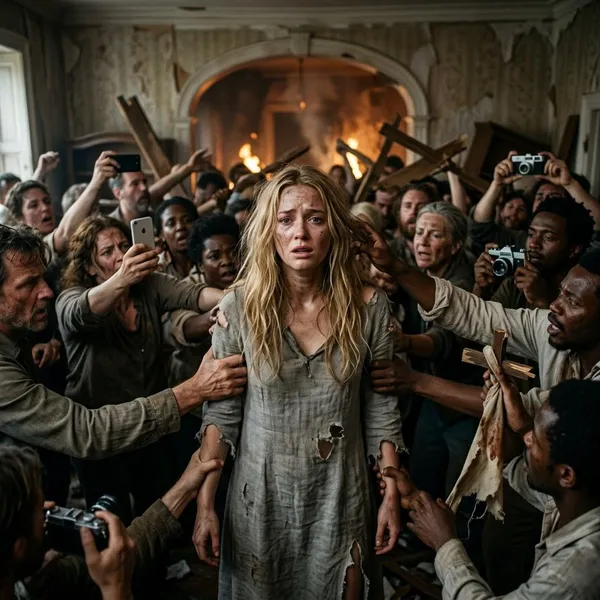
As more people arrive, the house stops feeling like a private home and becomes a collapsing world. Crowds gather, violence spreads, rooms are destroyed, and Mother is pushed through one crisis after another with almost no time to breathe.
This is the point where viewer reactions usually split. If you want a grounded thriller, the second half may feel too loud, symbolic, and punishing. If you like surreal horror, the escalation is the whole point: the movie turns social discomfort into apocalypse.
Who is in mother!?
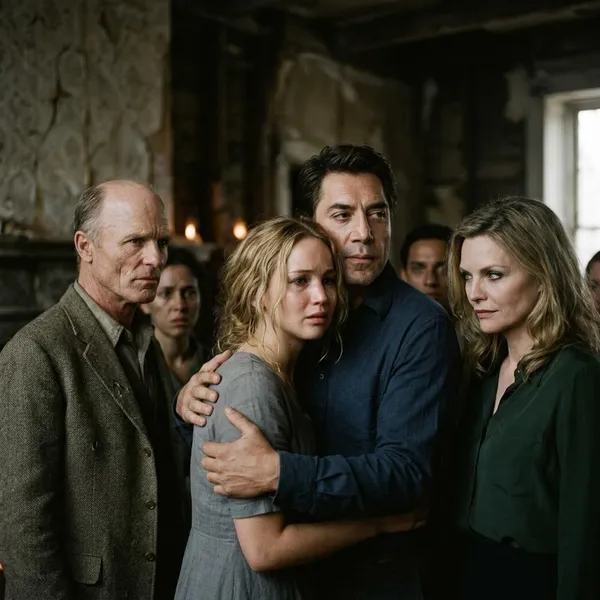
The cast is small, but every role carries two jobs. Each character has a place in the surface plot, and most also points toward a biblical or symbolic meaning.
Jennifer Lawrence as Mother
Jennifer Lawrence plays Mother, the woman whose perspective controls most of the film. She is not written as a traditional horror heroine who investigates clues or fights a villain; she is someone trying to preserve a home while everyone around her keeps taking more from it.
Symbolically, Mother is often read as Earth, nature, motherhood, or selfless love. Lawrence makes those ideas feel personal rather than academic, because her performance is built around the physical strain of being ignored again and again.
Javier Bardem as Him
Javier Bardem's Him is charming enough that you can understand why visitors are drawn to him, but that charm is also the problem. He wants admiration, forgiveness, and devotion, and he repeatedly asks Mother to absorb the consequences of his generosity.
Many viewers read Him as a God figure or as a creator-artist who feeds on worship. The more practical reading is just as unsettling: he is a partner who treats public praise as urgent and private harm as manageable.
Ed Harris as Man
Ed Harris plays Man, the first outsider to disturb the house. He seems vulnerable at first, which makes Him's welcome feel plausible, but his presence quickly proves that Mother's home can be entered without her real consent.
In the biblical reading, Man echoes Adam. Even without that layer, he works as the first crack in the boundary between private life and public demand.
Michelle Pfeiffer as Woman
Michelle Pfeiffer gives Woman a sharper, more openly invasive energy. She asks personal questions, judges Mother's life, and moves through the house as if politeness gives her permission to cross any line.
Her role is often linked to Eve, but what makes her memorable is not only the allegory. She captures a very recognizable kind of social pressure: the guest who smiles while making you feel like a stranger in your own space.
Brian Gleeson as Older Son
Brian Gleeson's Older Son brings resentment and violence into the home. His role is brief, but it marks the moment when the film moves from uncomfortable intrusion into irreversible damage.
He is commonly read as Cain, and that connection fits the movie's chain of biblical echoes. More simply, he shows how other people's unresolved conflict can enter a peaceful space and permanently change it.
Domhnall Gleeson as Younger Son
Domhnall Gleeson plays Younger Son, usually understood as the Abel figure. His part gives the sibling conflict its tragic weight and helps turn the house from a tense domestic setting into a place marked by grief, guilt, and ritual.
mother! ending explained
The ending of mother! is not meant to offer normal justice or closure. Mother destroys the house, Him survives, he takes the last piece of her love, the crystal restores the home, and a new Mother appears in the bed.
The cleanest way to read the ending is as a cycle of creation and exploitation. Mother gives life, care, and love; Him uses that love to create again; the new cycle begins without him truly changing.
Mother destroys the house
After the house has been completely overrun, Mother goes to the basement, breaks the oil tank, and sets the home on fire. It is not a neat act of revenge. It is the final move of someone whose boundaries, body, child, and world have all been violated.
On a symbolic level, the fire can be read as nature's breaking point or as the collapse that follows endless consumption. The important detail is that Mother no longer tries to repair the system. She destroys the place that has been feeding on her.
Him survives the fire
Him survives because he is not operating under the same human limits as Mother. That survival pushes the ending fully into myth rather than realism.
It also makes the ending feel especially cruel. Mother is destroyed by what she has given, while Him remains able to speak, choose, and begin again.
He takes Mother's final love
When Him asks for Mother's final love, she gives it to him, and he removes a glowing crystal-like object from her body. This is the key image of the ending: even after everything, her love becomes material for his next creation.
The scene is disturbing because it turns devotion into a resource. Him may mourn her in some way, but he still uses what is left of her.
The crystal restores the house
Him places the crystal back in its stand, and the burned house rebuilds itself. The restoration looks beautiful, but it is not hopeful in a simple sense.
The house restarts because Mother's essence has powered another beginning. If the house represents Earth, the ending suggests repeated cycles of creation, damage, collapse, and renewal without real moral growth from the one who keeps demanding love.
A new Mother appears
A new woman wakes in the restored house and calls for Him, repeating the opening pattern. The previous Mother has not been saved; she has been replaced.
That final reset is the horror of the ending. Nothing essential has changed, because Him's need for love, worship, and inspiration remains stronger than any lesson the destruction might have taught him.
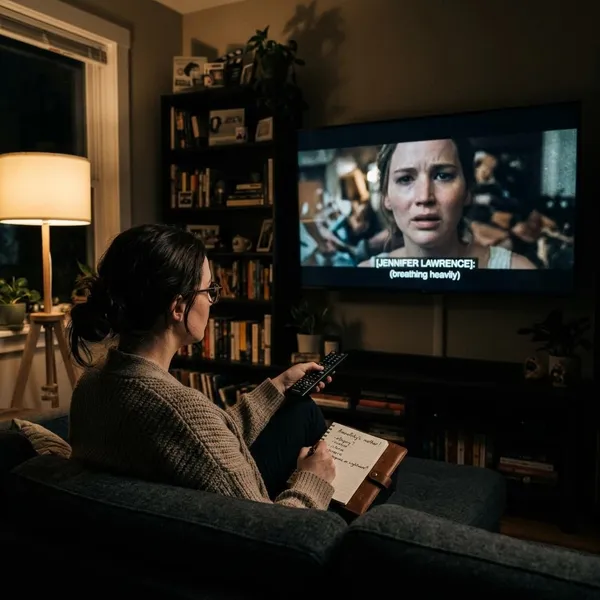
Is mother! worth watching?
mother! is worth watching if you want a bold, symbolic, uncomfortable film rather than a relaxing thriller. It is not the best choice for a casual movie night, and it is definitely not a tidy mystery where the ending calmly explains every clue.
Best for art-house fans
Art-house viewers are the most likely to appreciate what Aronofsky is doing. The camera stays close to Mother, the sound design keeps pressure on the viewer, and the film commits fully to its symbolic structure even when it becomes unpleasant.
If you enjoy movies that are better to argue about afterward than to "solve" neatly, mother! has plenty to offer. It can be read through religion, environmental destruction, gendered labor, celebrity worship, or the selfishness of artistic creation.
Strong for symbolic horror
The film is strongest when treated as symbolic horror, not as a standard plot puzzle. Its fear comes from escalation: one guest becomes a crowd, one ignored boundary becomes a destroyed world, and one woman's care becomes something everyone feels entitled to consume.
For a viewer who likes horror with monsters, chase scenes, or clean rules, that may feel frustrating. For a viewer who wants dread built from metaphor and emotional pressure, it is exactly why the movie still has power.
Conclusion
mother! is easiest to recommend with a warning attached: it is fascinating, intense, and carefully made, but it is also abrasive by design. If you want a straightforward thriller, choose something else; if you want a film that turns a broken home into a brutal allegory about creation, worship, and exploitation, it is worth watching once and sitting with afterward.