If you searched for the snowman thriller movie, you probably want the story untangled more than another vague review. The short version is that Harry Hole investigates a serial killer who leaves snowmen near his victims, and the movie's mystery leads back to Mathias, a character hiding in plain sight. Expect full spoilers here, because the plot and ending only make sense when the clues, red herrings, and missing pieces are put in order.
What is The Snowman about?
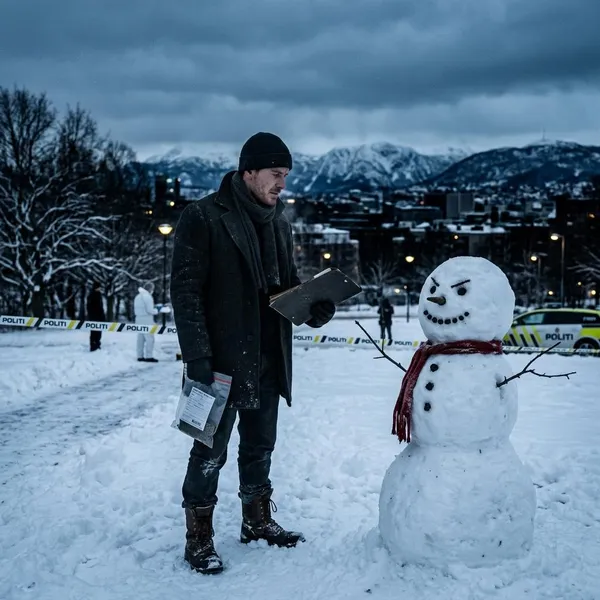
The Snowman is a Nordic crime thriller about detective Harry Hole investigating a missing woman whose disappearance appears to connect to older murders. The killer's signature is the snowman, a simple winter image turned into a warning sign.
Harry Hole investigates a woman's disappearance
Harry Hole is introduced as a talented Oslo detective whose personal life is in poor shape. He drinks, misses obligations, and struggles to stay connected to Rakel and her son Oleg, but he still has the instinct to notice when a case does not feel ordinary.
The investigation begins when Birte Becker disappears around the first snowfall. A strange message aimed at Harry suggests that her case is not isolated, which moves the story from a missing-person investigation into the possibility of a long-running serial killer.
Katrine Bratt links the case to older murders
Katrine Bratt brings the focus Harry often lacks. She studies older files, compares patterns, and sees that several disappearances share troubling details involving women, family secrets, and winter timing.
Snowmen appear as the killer's calling card
The snowmen are not decorative horror props. They are the killer's signature, left near crime scenes to mark the murders and taunt the police. That image is the film's strongest idea: something harmless and childlike becomes a sign that violence has already happened or is about to happen.
- For the police: the snowmen help connect cases across time.
- For the audience: they create unease without needing constant jump scares.
- For the killer: they turn the murders into a ritual, not just attacks.
The investigation moves between Oslo and Bergen
The shift between Oslo and Bergen shows that the case is bigger than one neighborhood or one recent crime. Past failures matter, old police work resurfaces, and the snowy Norwegian setting gives the movie much of its identity.
This is one of the clearer reasons to watch the film even if the plot bothers you. The locations make the story feel cold, isolated, and slightly unreal, which suits a killer who hides in plain sight while leaving symbols in open spaces.
Who is in The Snowman cast?
The cast is stronger than the screenplay around it. Michael Fassbender, Rebecca Ferguson, Charlotte Gainsbourg, Jonas Karlsson, J.K. Simmons, and Val Kilmer give the movie the feel of a prestige crime thriller, even when the editing and story structure do not always support them.
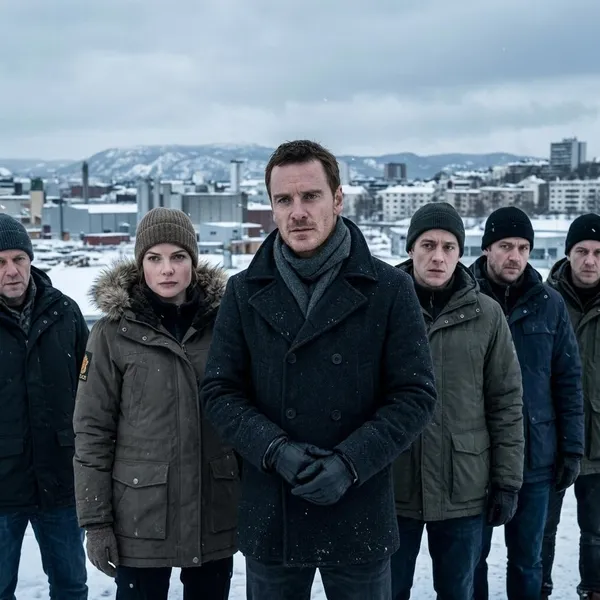
Michael Fassbender as Harry Hole
Michael Fassbender plays Harry as exhausted, inward, and emotionally unreliable rather than flashy. He makes Harry believable as a detective who can read a crime scene but cannot manage his own life with the same clarity.
The performance is strongest in quiet scenes where Harry is watching, thinking, or realizing he has missed something. The weakness is not Fassbender so much as the film's habit of letting Harry drift through parts of the case instead of driving it with force.
Rebecca Ferguson as Katrine Bratt
Rebecca Ferguson gives Katrine a sharper, more active energy. She feels like the person actually doing the homework: looking at old files, chasing links, and asking why earlier investigations failed.
That makes her one of the most useful characters in the movie. For viewers trying to follow the plot, Katrine often provides the thread that Harry and the editing do not always hold tightly enough.
Charlotte Gainsbourg as Rakel
Charlotte Gainsbourg plays Rakel with restraint, which helps the personal side of the story feel less like a standard thriller device. Rakel still cares about Harry, but she has also learned that his damage can hurt the people around him.
Her importance grows late in the film when the killer's attention moves closer to Harry's home life. At that point, Rakel is not just "the ex-partner"; she is the person who makes the case hurt Harry personally.
Jonas Karlsson as Mathias
Jonas Karlsson plays Mathias as calm, ordinary, and easy to underestimate. That choice matters because Mathias needs to seem like a stable presence in Rakel's life before the movie reveals who he really is.
If you are rewatching the film after knowing the twist, Mathias becomes more interesting. The performance is built around not drawing too much attention, which is exactly how the character survives inside the story for so long.
J.K. Simmons as Arve Støp
J.K. Simmons plays Arve Støp as powerful, guarded, and suspicious enough to function as a red herring. He is the kind of character a viewer is meant to distrust quickly: wealthy, connected, and surrounded by hints of sexual and moral corruption.
Val Kilmer as Gert Rafto
Val Kilmer appears as Gert Rafto, a detective connected to earlier parts of the case. His scenes are among the film's more awkward pieces, partly because they arrive as fragments from the past.
Rafto still has a clear function: he shows that the Snowman case did not begin with Harry. Someone had a chance to see the pattern before, and that failure gives the present investigation a heavier, more tragic feel.
The Snowman plot explained
The easiest way to follow The Snowman is to separate the main case from the distractions. The main line is simple: Birte Becker disappears, Harry and Katrine connect her case to older murders, the investigation gets tangled in false suspects, and Mathias is finally exposed as the killer.
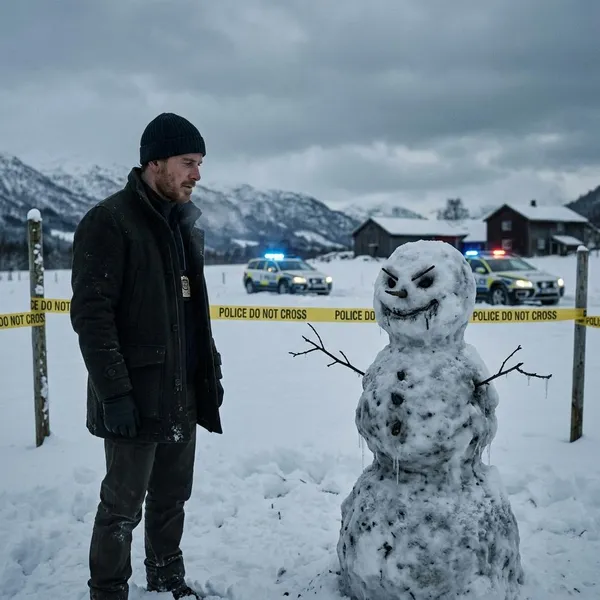
Birte Becker's disappearance begins the investigation
Birte Becker's disappearance is the entry point into the whole mystery. At first, it looks like a single missing-person case, but the timing, the staged feeling, and the message to Harry suggest something more deliberate.
Her case also introduces the killer's obsession with family and motherhood. The victims are not chosen at random; they fit Mathias's damaged idea of who deserves punishment.
Earlier cold cases reveal the same murder pattern
As the investigation widens, older disappearances begin to resemble Birte's case. Women vanish, snowmen appear, and the first snowfall becomes part of the pattern.
- Repeated timing: the crimes are associated with winter and first snow.
- Repeated victim type: the killer focuses on women tied to his ideas about motherhood and betrayal.
- Repeated symbol: the snowman connects crimes that might otherwise seem separate.
Katrine secretly investigates her father's death
Katrine has a private reason for caring about the case. She suspects her father's death may connect to the same network of old crimes, hidden parentage, and police failure.
Her secrecy makes sense emotionally, but it is a dangerous choice. A more cautious detective would share more with the team; Katrine pushes alone because the case is not just professional for her. That makes her effective, but it also leaves her exposed.
Several false suspects distract Harry from the killer
The film points suspicion toward several men, especially Arve Støp and others connected to the victims or to old scandals. These red herrings are meant to keep Mathias in the background.
This is also where many viewers lose the thread. The false suspects are not always developed cleanly, so they can feel like loose pieces rather than carefully placed misdirection. A practical way to watch is not to treat every suspicious man as equally important; most exist to show how easily one real killer can hide inside a wider culture of secrets and abuse.
Rakel and Oleg become the final targets
Late in the movie, the danger turns toward Rakel and Oleg, which makes the case personal for Harry. Until then, he has been trying to solve a pattern. Now he has to protect the closest thing he has to a family.
This shift also clarifies Mathias's role. He is not only part of the investigation from a distance; he is already inside Harry's personal world, which makes the final act more direct than the middle of the film.
The Snowman ending explained
The ending reveals Mathias as the Snowman Killer. He has been hiding behind the image of a decent, stable partner while targeting women through a warped belief system shaped by childhood trauma.
Harry eventually confronts him at a frozen lake. Mathias dies after falling through the ice, but the ending is not triumphant: Katrine is dead, Rakel and Oleg have been endangered, and Harry survives with another failure behind him.
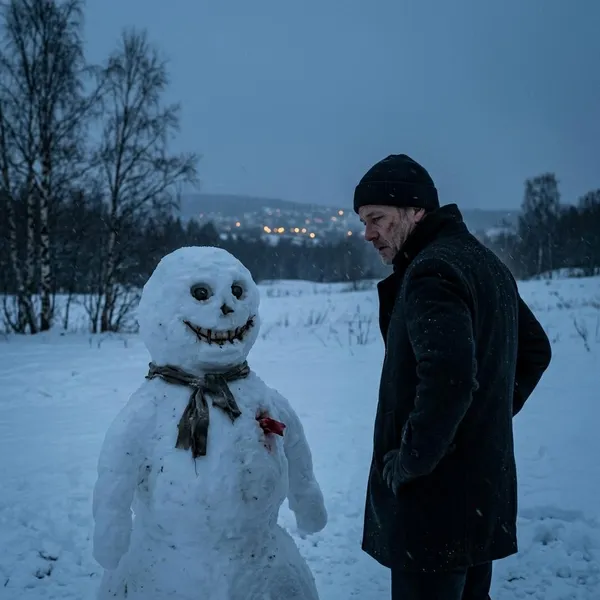
Mathias is revealed as the Snowman Killer
Mathias is the killer, and the reveal is designed around the idea of danger hiding in normal domestic life. He does not look like the obvious villain for most of the movie, which is why suspicion can sit on louder, stranger, or more visibly corrupt characters instead.
His childhood trauma explains his choice of victims
Mathias's motive comes from childhood trauma involving abandonment, uncertain parentage, and anger toward mothers. He projects that pain onto women he judges as guilty, especially women connected to family secrets or betrayal.
That does not make his actions sympathetic; it explains the pattern. The snowmen, the victim choices, and the repeated focus on motherhood all come from his distorted attempt to punish people for the wound he carries.
Katrine is killed while pursuing the case alone
Katrine dies because she gets too close while following her own private investigation. Her death is one of the clearest warnings in the story: intelligence is not enough when a detective is isolated, emotionally invested, and facing someone who already knows how to stay hidden.
Harry confronts Mathias at the frozen lake
The frozen lake gives the climax the kind of stark image the movie handles well. Harry is no longer sorting through files or chasing partial clues; he has to face Mathias directly before Rakel and Oleg become the final casualties.
Symbolically, the setting is not subtle, but it fits. The whole story has been about buried truths under cold surfaces, and the ice finally becomes the place where that hidden violence breaks open.
Mathias falls through the ice and dies
Mathias dies when he falls through the ice. There is no grand confession that neatly fixes the story and no warm sense of justice arriving on time.
The ending leaves a bleak aftertaste, which is very much in line with Nordic noir. Harry stops the killer, but he does not save everyone, and the emotional damage around the case remains.
Conclusion
The Snowman is worth watching mainly for its cast, winter atmosphere, and grim serial-killer premise, not because it tells its mystery with perfect control. If you want a clean detective puzzle, the film may feel messy and underexplained; if you enjoy moody crime stories and do not mind filling in gaps, it can still hold your attention. The clearest practical judgment is simple: watch the movie for the mood, read the novel if you want the stronger version of the story.