If you are choosing between thriller vs horror movies, the quickest test is what you want to feel: a thriller keeps you tense and curious, while horror tries to scare, disturb, or unsettle you. The two genres often overlap, but thrillers usually make you think your way through danger, and horror makes the danger feel harder to escape.
How do thriller and horror movies compare?
The main difference is not the setting, the villain, or whether the movie has a dark hallway. It is the emotional engine. Thrillers are built around suspense, pressure, secrets, and delayed answers. Horror is built around fear, dread, shock, and the feeling that something is wrong or unsafe.
That matters when you are picking a film. If you enjoy guessing who is lying, following clues, or watching someone race against time, a thriller is usually the safer choice. If you want monsters, dread, jump scares, disturbing images, or a stronger physical fear response, horror is more likely to deliver that.
Suspense versus terror
Suspense makes you lean forward because you want to know what happens next. Terror makes you pull back because the scene feels threatening or unbearable. A thriller often asks, "Can the character figure this out in time?" Horror more often asks, "How bad is this going to get?"
Realistic danger versus supernatural or extreme threats
Thrillers usually stay closer to plausible danger: stalking, kidnapping, corruption, blackmail, espionage, murder, or conspiracy. Horror can use realistic threats too, but it often pushes them into something more extreme, grotesque, supernatural, or psychologically disturbing.
- Leans thriller: the danger could happen in the real world and the story focuses on stopping, exposing, or escaping it.
- Leans horror: the danger feels unnatural, monstrous, cursed, overwhelming, or designed mainly to frighten you.
Investigation versus survival
A thriller protagonist usually has a job to do: investigate, decode, hide, expose, escape, or outsmart someone. Horror characters may also make smart choices, but the story often puts survival ahead of solving the whole mystery.
Plot twists versus frightening imagery
Thrillers often live or die by what gets revealed: the betrayal, the hidden motive, the false identity, the missing piece of evidence. Horror can have twists, but its most memorable moments are often images, sounds, or scenes that stick in your head.
If people describe a movie by saying, "You will never guess the ending," it probably leans thriller. If they say, "I could not get that scene out of my mind," it may lean horror.
Mental tension versus physical fear
Thrillers make you suspicious. You watch faces, question alibis, and try to stay ahead of the story. Horror is more likely to make your body react: bracing before a door opens, looking away from gore, or feeling uneasy during a quiet scene.
Controlled pacing versus unsettling atmosphere
A thriller usually moves with a clear sense of pressure. Even slower scenes tend to reveal information, tighten a deadline, or complicate the protagonist's choices. Horror can afford to linger longer because atmosphere itself can be the threat.
What makes a movie a thriller?
A movie is a thriller when suspense is the main experience and the story keeps pushing the viewer to ask what is true, who is dangerous, and whether the protagonist can act in time. It can be dark or violent, but it does not need monsters, gore, or supernatural fear to work.
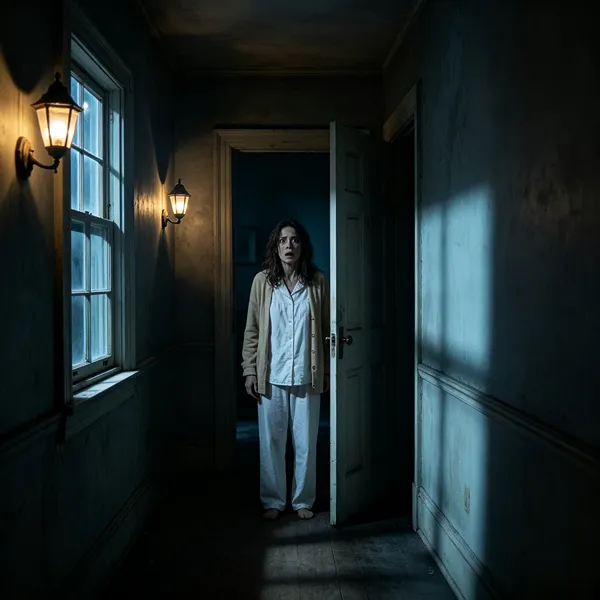
A mystery, crime, or conspiracy drives the story
Most thrillers have a central problem that pulls the plot forward: a murder, disappearance, cover-up, secret identity, corrupt institution, or hidden motive. The viewer stays engaged because every answer creates a sharper question.
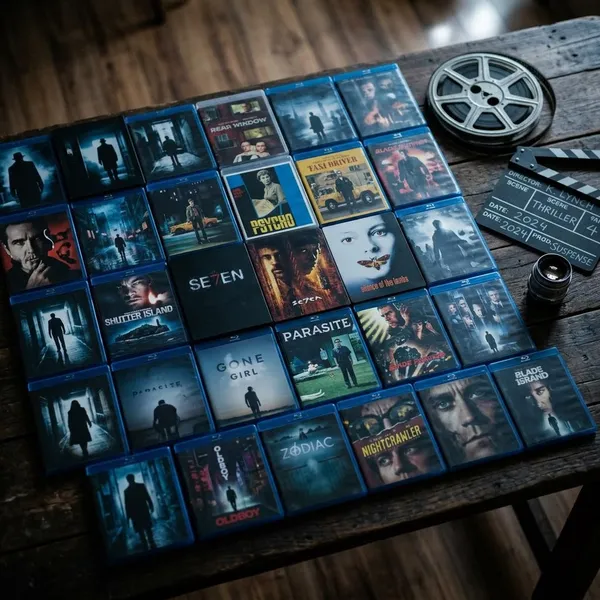
Films such as Gone Girl, Prisoners, and Se7en can be disturbing, but their core appeal comes from secrets, investigation, and revelation. You are not only reacting to danger; you are trying to understand it.
The protagonist actively investigates or escapes danger
Thriller leads are rarely passive for long. They may be detectives, journalists, parents, lawyers, spies, or ordinary people caught in something dangerous, but they usually push back through choices.
- Investigation thriller: the lead follows clues and uncovers hidden truth.
- Escape thriller: the lead is hunted, framed, trapped, or forced to stay one step ahead.
- Conspiracy thriller: the lead realizes the danger is larger than one person.
Information is revealed gradually
Thrillers control what you know and when you know it. A suspicious phone call, missing file, strange witness statement, or small contradiction may not matter at first, then later become the key to the whole plot.
Tension grows through uncertainty and time pressure
Uncertainty gives a thriller its grip. The protagonist may not know who to trust, where the threat is coming from, or what will happen if they wait too long. Time pressure turns that uncertainty into urgency.
A missing child, a vanishing witness, a deadline before evidence disappears, or a killer who may strike again can make even a quiet scene feel tense. The movie does not need constant action if the consequences are clear.
The audience is encouraged to analyze the plot
A thriller invites you to participate. You compare motives, notice inconsistencies, and test theories as the story moves. That is why thrillers are often a better fit for viewers who want a tense film but do not enjoy being scared in a horror sense.
- Guessing the truth? It probably leans thriller.
- Bracing for fear? It probably leans horror.
- Doing both? It is likely a hybrid.
Psychological thriller vs psychological horror
Psychological thrillers and psychological horror are easy to confuse because both use paranoia, unstable perception, obsession, trauma, or unreliable memories. The difference is how that mental instability is used. A psychological thriller turns the mind into a mystery; psychological horror turns it into a source of fear.
Psychological thrillers build paranoia around a mystery
In a psychological thriller, confusion usually points toward a hidden truth. Someone may be manipulating the protagonist, memories may be unreliable, or the facts may not line up. The audience is meant to question reality, but also to look for an answer.
For viewers who like dark puzzles, this subgenre is often the better choice. The mood can be intense, but the pleasure comes from doubt, misdirection, and eventual revelation.
Psychological horror turns the mind into the source of fear
Psychological horror is less interested in solving the mind and more interested in making it feel unsafe. Grief, guilt, trauma, isolation, or obsession may become terrifying because the character cannot fully trust themselves or their surroundings.
Can a movie be both thriller and horror?
Yes, a movie can be both thriller and horror, and many popular films work because they use both sets of tools. A hybrid might use thriller structure to create suspense, then horror imagery or violence to create fear.
The better question is which side does more of the work. If the story is mainly about clues, pursuit, pressure, and revelation, it leans thriller. If the main memory is dread, monsters, gore, or disturbing fear, it leans horror.
Jaws combines pursuit suspense with creature horror
Jaws is a strong hybrid because the shark creates primal creature horror, while the story also builds suspense through investigation, public pressure, and pursuit. The water becomes frightening, but the film also keeps asking whether the characters can identify the danger and stop it in time.
Scream combines a murder mystery with slasher horror
Scream is horror first because it belongs to the slasher tradition: a masked killer, violent attacks, fear, and survival. At the same time, it uses thriller mechanics through suspicion, clues, red herrings, and the mystery of who the killer is.
If you like guessing the culprit but do not want full supernatural horror, this kind of slasher-mystery can be a good middle ground. If you avoid stabbing scenes or home-invasion fear, it may still be too much.
A Quiet Place combines survival tension with monster horror
A Quiet Place uses monsters as horror, but its suspense comes from rules and consequences. Sound creates danger, silence becomes strategy, and small decisions can change whether the family survives.
That makes it useful for understanding hybrids: horror supplies the threat, while thriller structure controls the tension moment by moment.
Conclusion
The easiest way to choose is to start with your own tolerance: pick a thriller when you want tension, clues, and pressure without necessarily wanting to be scared, and pick horror when you want dread, shock, or a more physical fear response. When a movie gives you both a puzzle to follow and fear to endure, it probably sits in the overlap, which is often where the most memorable genre films live.