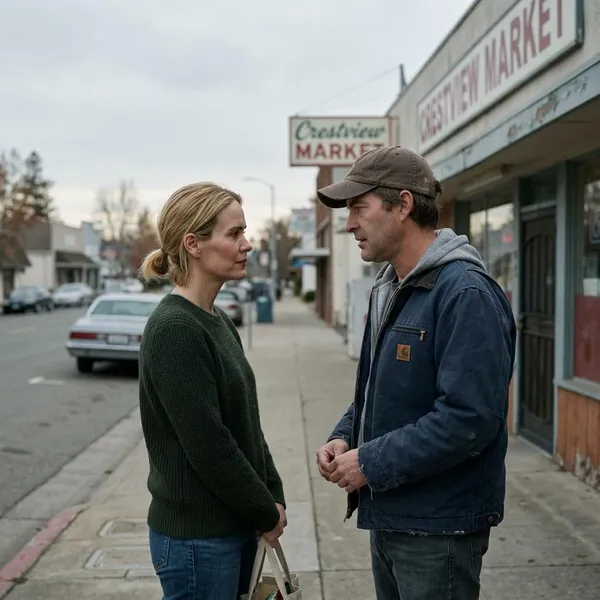
Trap is a sharp, strange choice if you want a thriller built on pressure rather than big action scenes: a father takes his daughter to a pop concert, then realizes the whole event may be designed to catch him. The movie works best when you know going in that it is part cat-and-mouse suspense, part dark comedy, and part story about a man trying to keep his normal-family mask from slipping.

Trap cast
The cast matters because Trap asks nearly every main character to perform two things at once: what they feel and what they want others to believe. That is especially true for Cooper, but it also shapes Riley's innocence, Rachel's suspicion, Lady Raven's public image, and the FBI's controlled patience.
Josh Hartnett as Cooper
Josh Hartnett carries the movie as Cooper, a father who seems calm and attentive until the film lets you see how quickly he is calculating exits, risks, and lies. His performance is effective because he does not play Cooper as a shouting villain; he plays him as someone who has learned how to look safe.
Ariel Donoghue as Riley
Ariel Donoghue gives Riley the ordinary excitement the movie needs. She is not there just to make Cooper's escape harder; she shows what Cooper is protecting, manipulating, and betraying at the same time.
For viewers who respond more to family tension than police procedure, Riley is what keeps the premise from becoming cold. Every lie Cooper tells beside her feels worse because she still believes she is simply at a concert with her dad.
Saleka Shyamalan as Lady Raven
Saleka Shyamalan's Lady Raven makes the concert feel like a real event rather than a thriller backdrop. Her stage presence is important because the crowd, music, lights, and fan energy are not decoration; they are part of the trap.
There is also a neat thematic mirror here. Lady Raven performs openly for thousands of people, while Cooper performs normality in private conversations and quick social exchanges.
Alison Pill as Rachel
Alison Pill's Rachel becomes more important as the story moves away from the concert and into Cooper's home life. She brings a quieter kind of tension, because Rachel is not chasing Cooper through corridors; she is questioning the version of him she has lived with.
Hayley Mills as Dr Grant
Hayley Mills gives Dr Grant a controlled, observant presence. That restraint helps the FBI side of the story feel less like a noisy action operation and more like a psychological containment plan.
Her scenes also make Cooper feel more dangerous. He is not only being blocked by guards and cameras; he is being studied by someone who understands that charm and quick thinking can be part of the threat.
Jonathan Langdon as Jamie
Jonathan Langdon's Jamie adds awkwardness and social friction at the right moments. In a movie where Cooper is constantly trying to manage impressions, even a small conversation with the wrong person can feel risky.
Jamie also helps the movie's dark humor land. The tension often comes from watching normal public behavior become uncomfortable because the audience knows what Cooper is hiding.
Reasons to watch Trap
Trap is worth watching if you like thrillers where the fun comes from watching someone think under pressure. It is less satisfying if you need strict realism, a grounded police operation, or a completely closed ending.
Clever concert setting
The concert setting is the film's smartest hook. A venue naturally gives the story crowds, noise, security checks, restricted areas, staff-only corridors, cameras, and limited exits without needing much explanation.
- For suspense fans: the public setting makes every movement feel exposed.
- For casual viewers: the bright pop-show atmosphere keeps the movie from feeling visually generic.
- For plot-focused viewers: the setting creates rules Cooper has to work around.
Strong lead performance
Hartnett's performance gives the movie most of its bite. Cooper has to appear warm to Riley, harmless to strangers, clever enough to keep moving, and unstable enough to remain frightening.
That balance is why the movie stays watchable even when the plot becomes heightened. A louder performance would make the premise silly; a flatter one would drain the tension.
Fast cat and mouse tension
The tension works because Cooper cannot simply run. He has to keep acting like a normal father while reading security patterns, improvising excuses, and avoiding behavior that would alarm Riley or the people around him.
If you enjoy thrillers built from small decisions, this is where Trap is strongest. A wrong turn, a casual question, or a delay in the wrong place can matter more than a chase scene.
Dark humor and suspense
The movie has a weirdly funny edge, mostly because Cooper keeps landing in ordinary social situations while hiding extreme private panic. A polite exchange can become tense and absurd at the same time.
That tone will not work for everyone. Viewers expecting a grim serial-killer thriller may find the humor too odd, while viewers who like uncomfortable comedy mixed with suspense may find it one of the film's best qualities.
Trap ending explained
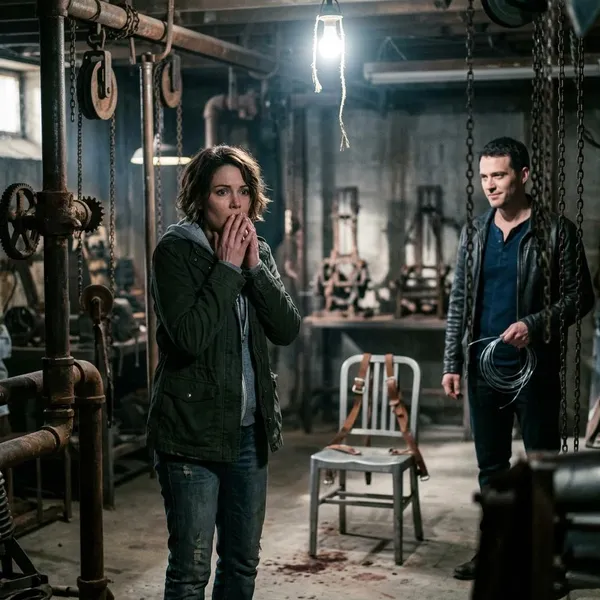
The ending of Trap is resolved in the immediate sense but not fully closed. Cooper is exposed, weakened, and arrested, yet the final detail with the metal pin keeps the possibility of another move alive.
The important point is that the trap does not only come from the FBI. Cooper loses control because the people closest to him, especially Rachel, stop accepting the role he has been playing at home.
Rachel set the trap
Rachel's role changes the ending from a simple police takedown into something more personal. Cooper spends much of the movie trying to escape public detection, but the final trap reaches him through his private life.
That is why her involvement lands. His home was supposed to be the safest stage for his false identity, and it becomes the place where the performance breaks.
Cooper eats the drugged pie
Cooper eating the drugged pie matters because it turns an ordinary domestic gesture into the thing that weakens him. He is used to reading danger in public spaces; he is less prepared for betrayal inside a familiar family setting.
The FBI arrests Cooper
The FBI does arrest Cooper, so the ending is not a fake-out where he simply walks away. The operation finally contains him after the concert trap and Rachel's suspicions narrow his options.
Still, the scene is not filmed like a clean victory lap. The movie wants you to feel relief, but not comfort.
Cooper steals a metal pin
The metal pin is the ending's warning sign. It is small, but it shows Cooper is still noticing tools, timing, and opportunities even after being captured.
For a character built around improvisation, that detail is more important than the object itself. It tells you his body may be restrained, but his habit of looking for angles has not stopped.
The final shot hints at escape
The final shot hints that Cooper might try to escape, but it does not show him succeeding. The safest reading is that the FBI has won this round, while the movie leaves his next move deliberately uncertain.
That ambiguity is likely to split viewers. If you want firm justice, it may feel frustrating; if you enjoy endings that leave a threat hanging in the air, it fits Cooper's character well.
Trap themes and meaning
The main meaning of Trap sits in the gap between public performance and private truth. The concert makes that idea obvious, but the sharper version is at home: Cooper has been performing husband and father as carefully as Lady Raven performs on stage.
Double lives and performance
Cooper's double life is the movie's central idea. He survives by knowing what people expect from a polite man, a caring parent, and a harmless concertgoer, then using those expectations as cover.
The concert setting strengthens that theme because everyone is watching a performance while missing the more dangerous one happening in the crowd.
Family trust and deception
Family trust gives the movie its emotional sting. Riley's trust makes Cooper's lies painful, while Rachel's suspicion shows that a double life eventually damages the people closest to it.
This is also where the movie becomes more unsettling than a standard chase thriller. The scariest idea is not only that Cooper can hide from police, but that he can hide in plain sight at home.
Control and improvisation
Cooper wants to seem controlled, but the movie keeps showing him improvising. He survives by adjusting quickly when a hallway is blocked, a conversation turns risky, or a plan stops working.
- Control: the image Cooper wants others to see.
- Improvisation: the real method he uses when pressure closes in.
- The pin: proof that he keeps creating options even after losing.
Hidden violence
Trap is disturbing because Cooper does not look like danger at first glance. He blends into a crowd of parents, fans, workers, and families, which makes the threat feel closer to everyday life.
The movie does not rely mainly on gore. Its fear comes from the idea that violence can be hidden behind manners, routine, and a believable smile.
Conclusion
Trap is easiest to recommend to viewers who like a clean thriller premise with a strange personality: a clever setting, a tense lead performance, dark humor, and an ending that leaves room for debate. It is not the best pick if you want airtight realism or full closure, but as a psychological thriller about performance, deception, and pressure, it gives you a lot to chew on after the credits.